



Multiwavelength Signatures
Different wavelengths reveal different regions of an accreting black hole. Interpreting these wavelengths together lets us test how those parts interact. I develop models that connect X-ray spectra, millimeter emission, and changes over time to the underlying plasma physics, asking which observations distinguish between competing descriptions of the accretion flow.
What I’ve shown
I used X-ray and millimeter observations together to constrain the emitting geometry of radio-quiet AGN. My model accounts for these bands through distinct but connected regions, showing how their combined constraints distinguish a compact corona from a more extended source.
In collaboration with observers, I helped interpret a jet launch tracked through coordinated radio and X-ray observations. The emergence of radio emission alongside changes in the X-ray source provided a way to connect newly launched ejecta to activity close to the black hole.
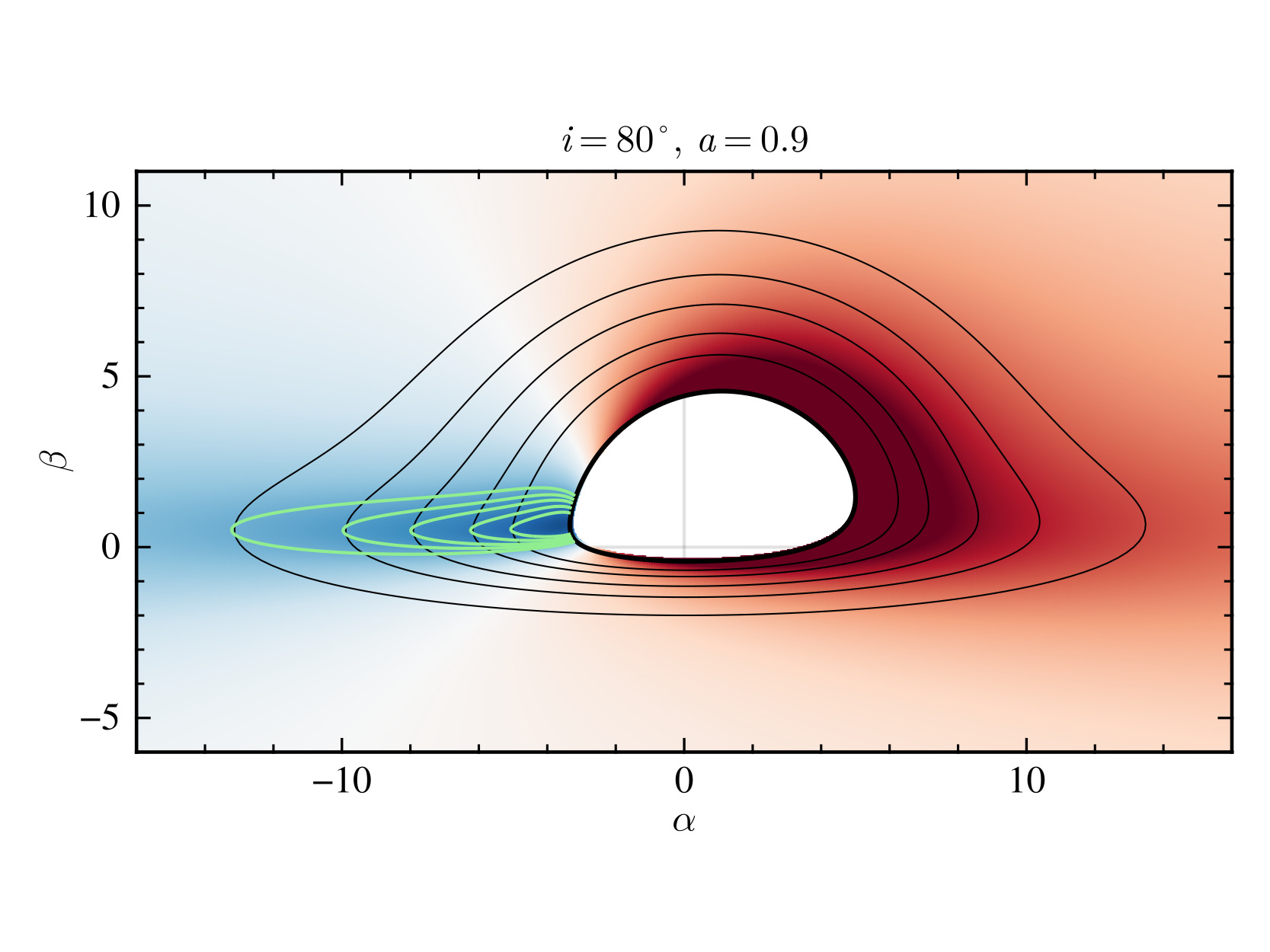
X-ray absorption spectra complement the broadband emission by tracing gas along our line of sight. My work suggests that orbital motion can explain some absorption “forests” commonly interpreted as ultrafast winds. Searching for accompanying redshifted features and tracking variability within these forests could test this interpretation. Coordinated observations across wavelengths could then connect changes in the absorbing gas to the evolving emission from the disk and corona.
Read more about connecting the corona, disk, and winds →
What I’m investigating next
How can we distinguish changes in the plasma from differences in black hole spin? Building on undergraduate student projects, I am calculating how non-axisymmetric disk structure and density fluctuations affect observed spectra and the spin inferred from them. I will also test whether variability supplies additional information that helps separate changes in the emitting region from the effects of spacetime.
Beyond the electromagnetic spectrum, neutrinos offer a complementary probe of energetic protons. I will test whether models constrained by X-ray and millimeter observations can also reproduce the neutrino emission, using these signals together to constrain particle acceleration and the available energy budget.